

When your career changes, the story you tell about your career can help you move forward or leave you stuck. If your story is about one job or one industry, your story ends when that job or industry goes away. If your story is about what you care about and the problems you like to solve, you can take it with you into your next job.
Most of us will have more than one job in our lives, and many of us will have more than one career. Sometimes we choose the change. Sometimes the change happens to us through a layoff, a shift in our industry, or new technology. When change comes, the story we’ve been telling about our work can stop matching our lives.
Key Takeaways
- A career story is the story you live by at work, not just what you say in a job interview. (What a career story is)
- For most of the last century, your job gave you your career story. Where you lived often decided your work, and you company decided a lot about your life. (One career story used to be enough)
- When the work your story was built on goes away, you have to write the next part of your story yourself. (When the work goes away)
- Career counselor Mark Savickas calls the feeling of not knowing what comes next “narrative confusion.” (Narrative confusion)
- A career story about what you care about and the problems you solve can be retold, and looking at your career like an entrepreneur helps. (Retelling your story and Thinking like an entrepreneur)
What is a career story?
A career story is the story you live by at work. Your career story is what you’ve learned about what kind of work you should do, what you’re good at, and what you’re supposed to accomplish.
Mark Savickas is a career counselor who developed career construction theory. He describes each job you’ve held as a short story. Together, your short stories make up the larger story of your career.
Most career advice is about telling your career story in a job interview. But you also live by your career story every day. Your career story shapes which jobs feel like you, which jobs you’d never consider, and what you think should come next.
Work is where many of us get paid and praised the most, so our career stories become some of the strongest stories we live by. I wrote more about how we learn our stories in Why Story.
One career story used to be enough
For most of the last century, you could have one career story your whole life, because the job gave you the whole story.
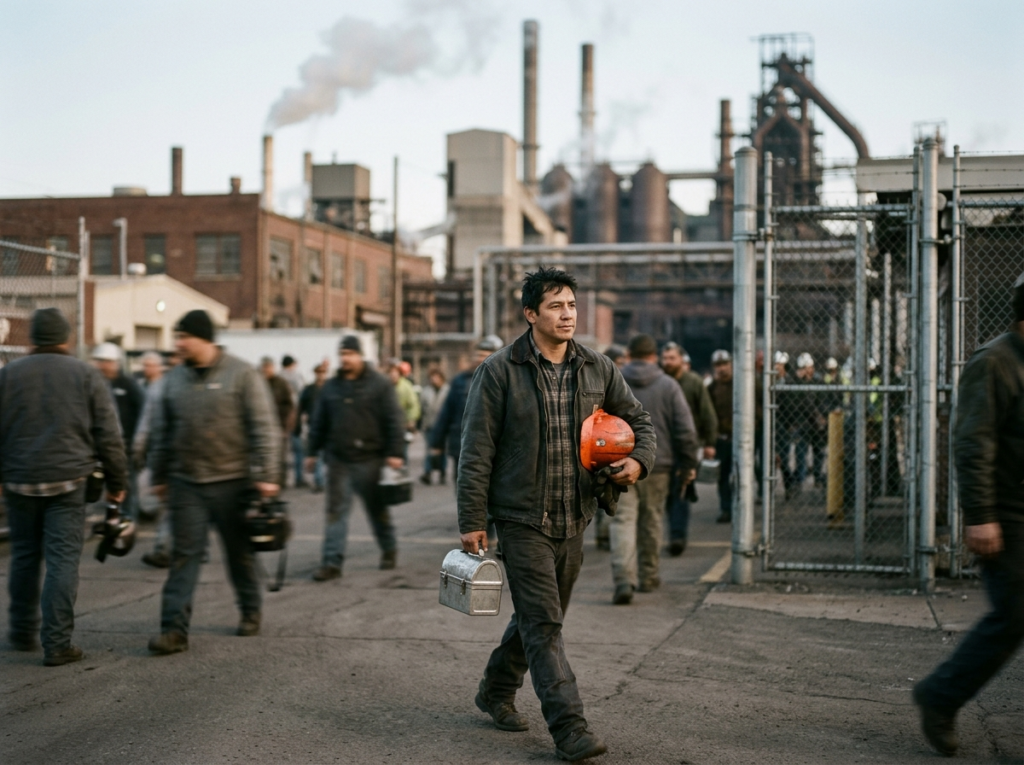
In many places, where you lived decided your work. If you grew up in a mining town, you’d probably become a miner. If you grew up where steel was made or cars were built, you’d probably work in a steel mill or on an assembly line.
Workers and employers also had an unspoken deal. You worked hard and did what the company needed. In return, the company took care of a lot of things for you.
Your days off, your vacation, and your next step came with the job. You didn’t have to make as many decisions, because the job made many of them for you.
Savickas writes that workers used to count on their organizations to provide “a grand narrative about how their lives would unfold.” In other words, the company held your career story, so you didn’t have to write it yourself.
What happens when the work your story was built on goes away?
When the work your story was built on goes away, you’re left without a story for what comes next. You have to write the next part yourself.

The deal between workers and employers has changed.
Savickas writes that people can no longer plan on spending 30 years building a career inside one job or one company. The responsibility for building a career has moved from the company to you.
As technology improves and people get more productive, some kinds of work shrink or go away. A repair shop could do well in the ’80s and ’90s. Then in the 2000s, repair became more about replacing whole parts than fixing them, and the work paid less.
You can believe you have a career and then watch the industry around your career disappear. When an industry goes away, a career story built around a job in that industry can feel demoralizing. Savickas writes that “a story that cannot be continued must be revised.”
As technology changes, we have to be more in control of our careers. The story we tell about ourselves matters more than ever.
Most of us don’t notice our career story until it stops working. We keep living the old story after it no longer fits, because the old story is the only one we know. I wrote more about why in how stories keep us stuck.
What is narrative confusion, and why does it feel like a blank page?
Narrative confusion is what Mark Savickas calls the feeling of not knowing what comes next in your career story. You’ve been pulled out of one chapter of your career, and you can’t see the next chapter. Savickas also compares narrative confusion to writer’s block.
In his article “Constructing Careers: Actor, Agent, and Author,” Savickas writes that most people who look for career help are in one of two places. Some have lost the career they were working toward. Others have finished one chapter of their career and need to start the next.
I see narrative confusion often in people looking for a career transition. They’re asking what’s next. When they look back at their career for an answer, they feel like a blank page is staring back at them.
The blank page is hard because your career story did more than describe your work. Your career story also told you who you were.
Savickas writes that people feel anxious when they face new demands without a sense of who they are to guide them. When your old career story ends, you can lose your job and your sense of who you are at the same time.
Narrative confusion doesn’t mean you have nothing to work with. Narrative confusion means your old story was written for a chapter that’s over.
How can you tell whether your career story can be retold?
You can tell whether your career story can be retold by looking at what your story is about. If your story is about a job title, a company, or an industry, your story ends when they do. If your story is about what you care about and the problems you keep solving, you can carry your story into your next job.
Savickas writes that when people move from one job to another, they “must let go of what they did yet not who they are.” Your job can end. Who you are keeps going.
Savickas calls the part that keeps going your career theme. Your career theme is what keeps showing up in your work no matter what your title is. Your career theme might be a problem you always end up solving, or something you always end up caring about. Savickas writes that when people face a disruption, their career theme is what guides them and keeps them going.
One way to see the difference is to finish the sentence “My work is about…”
| Built on a job | Built on a theme |
|---|---|
| My work is about running a repair shop. | My work is about figuring out why things break and getting them working again. |
| My work is about managing marketing at a software company. | My work is about helping people understand something new well enough to say yes to it. |
| My work is about teaching high school. | My work is about helping people learn something that seemed out of reach. |
The same career can be told in many ways, and there’s no single right version. The version that matters is the one you can keep telling after your work changes.
If you own a business, the same thing can happen when the story that built your business gets too small for you. I wrote about what happens when you’ve outgrown the story that built your business.
What changes when you look at your career like an entrepreneur?
Looking at your career like an entrepreneur means expecting your work to change. Instead of asking which job title you want next, you ask which problem you want to solve next. You can look at your career this way whether you work for someone else or run your own business.

Entrepreneurs spend their time trying to solve problems, and they keep having to change how they see things. An entrepreneur’s story is about the problems they solve, so the story keeps going when the work changes.
If you work for a company, you can still think like an entrepreneur. People who think like entrepreneurs inside a company are sometimes called “intrapreneurs.” You don’t have to quit your job to look at your career the way an entrepreneur would.
People also think well of entrepreneurs. In Gallup’s polling, 95% of Americans said they view small business positively.
How to start retelling your career story
- Write down the jobs you’ve had. For each job, write a few sentences about what you did and why it mattered to you.
- Look for what repeats. Notice what you cared about and which problems you kept solving, no matter what your title was. What repeats is your career theme.
- Describe your next chapter as a problem you want to solve. Write down the problem, not the job title.
- Take one step on that problem this week. Keep the step small enough that you’ll do it.
Savickas writes that action, not feeling decided, is what moves people forward. He also writes that many people already know what they need to do to get through a career change. Going through these four steps can help you see what you already know.
Frequently Asked Questions
What is a career transition?
A career transition is a move from one kind of work to another. You might choose a career transition, or it might happen to you through a layoff, a change in your industry, or a business that stops working. Most advice treats a career transition as a job search. A career transition also changes the story you tell about your work.
Is a career story the same as an interview answer?
No, an interview answer is only the version of your career story you tell an employer. Your career story is the one you live by, and it shapes which jobs you apply for in the first place.
How do I make sense of my career after a layoff?
Start by separating what you did from who you are. Write down the jobs you’ve had, and look for what you cared about and the problems you kept solving. Use that career theme to decide what to work on next.
Can you change the story you tell about your career?
Yes, you can change your career story, because the same career can be told in many ways. Mark Savickas’s approach to career counseling helps people retell their career stories so the stories can keep going. The facts of your work history stay the same. What changes is what your story is about.